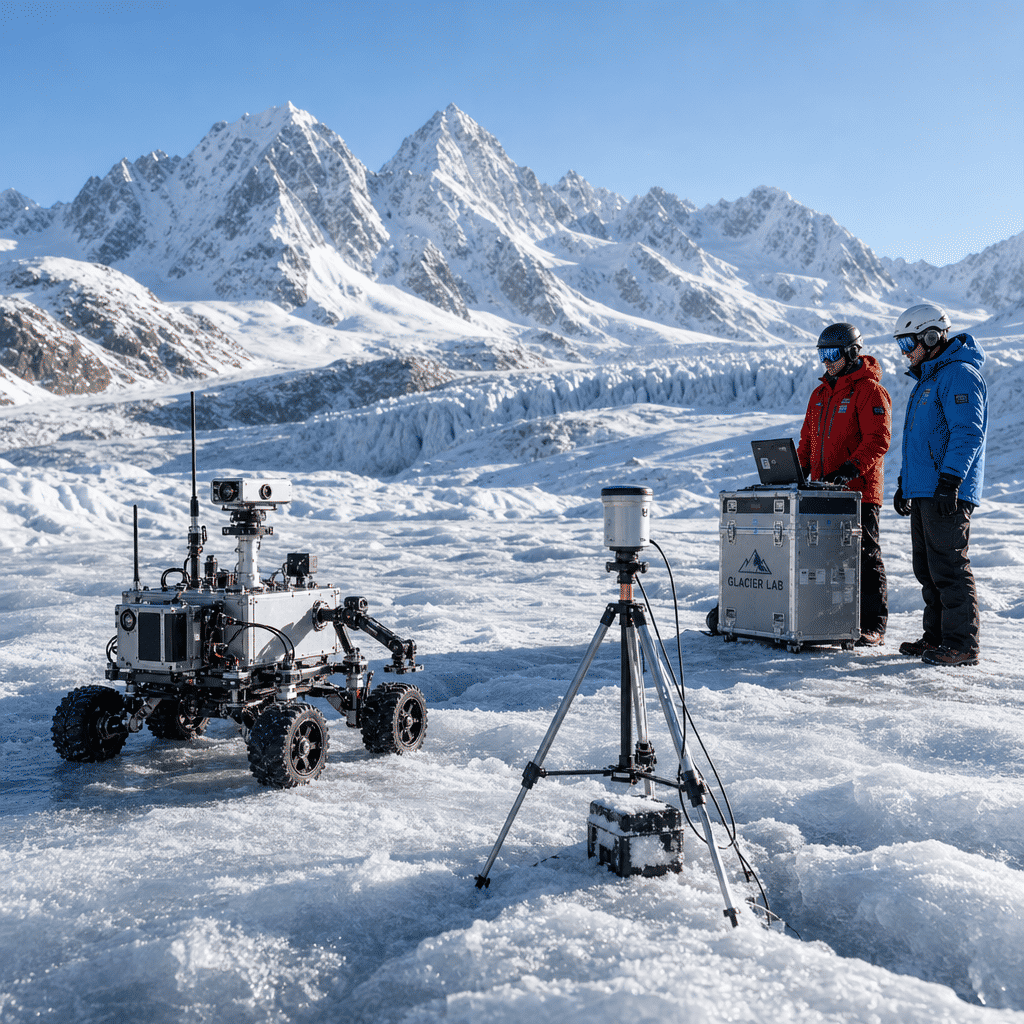
In recent years, the study of glacier dynamics has gained significant attention as scientists seek to understand and mitigate the impacts of climate change. Glaciers, which are among the most sensitive indicators of climatic shifts, hold vast amounts of freshwater and influence global sea levels. Traditionally, studying these massive ice bodies has been labor-intensive and challenging, given their remote locations and the hostile environments in which they exist. However, harnessing innovative technologies is revolutionizing our ability to monitor and analyze these critical natural phenomena with unprecedented accuracy and efficiency.
One of the foremost technologies reshaping glaciology is remote sensing. Satellites equipped with sophisticated sensors provide continuous and comprehensive data, allowing scientists to observe vast and inaccessible glacier regions. Instruments such as synthetic aperture radar (SAR) and laser altimeters measure surface changes, thickness, and flow rates over time. These remote sensors penetrate cloud cover and operate under various light conditions, providing consistent data used to create high-resolution 3D models of glacier topography and dynamics.
Drones, or unmanned aerial vehicles (UAVs), have emerged as highly valuable tools in glacier research. Unlike satellites, drones can fly at low altitudes, offering detailed and localized observations. They are particularly useful for capturing high-resolution imagery, mapping surface features, and assessing conditions at glacier termini where ice meets water. Equipped with thermal cameras and LiDAR systems, drones provide intricate data on surface melt patterns and crevasse formation, critical for understanding the nuances of ice movement and melting processes.
In addition to aerial technologies, ground-penetrating radar (GPR) systems have made great strides. GPR provides insights into the internal structure of glaciers, revealing layers of snow accumulation and hidden crevasses. This non-invasive method enables scientists to gather crucial information on ice thickness and basal conditions, key factors influencing glacier flow and stability. When combined with surface observations, this data helps build comprehensive models of glacier behavior under various climatic scenarios.
Machine learning and artificial intelligence (AI) are also making significant contributions to the field of glaciology. These technologies process vast datasets from multiple sources, identifying patterns and trends that may not be immediately evident to human analysts. By applying AI algorithms to satellite imagery and climate data, researchers can develop predictive models that forecast glacier responses to climate change. Such models are useful for anticipating potential contributions to sea-level rise and for guiding policy decisions related to environmental management and conservation.
Moreover, the integration of autonomous sensor networks on and beneath glacier surfaces is providing real-time data on temperature, pressure, and humidity. These networks, which consist of devices that communicate with each other and central databases, offer critical insights into ongoing changes and help identify the early signs of destabilization in glacier systems. This information is vital for developing timely responses to mitigate downstream impacts like glacial lake outburst floods.
The synergy between these cutting-edge tools is creating a holistic understanding of glacier dynamics. Collaborative initiatives between governments, research institutions, and technology companies are further accelerating advancements in this field. As we continue to refine these technologies and develop new ones, our ability to monitor and predict changes in the world’s glaciers will significantly improve.
In conclusion, innovative technologies are revolutionizing our approach to studying glacier dynamics. By leveraging advancements such as remote sensing, drones, ground-penetrating radar, AI, and autonomous sensor networks, researchers are gaining deeper insights into how glaciers are changing and what those changes mean for our planet. As humanity grapples with the challenges of climate change, these technologies will be crucial for informing policy decisions and preserving our global ecosystems for future generations.