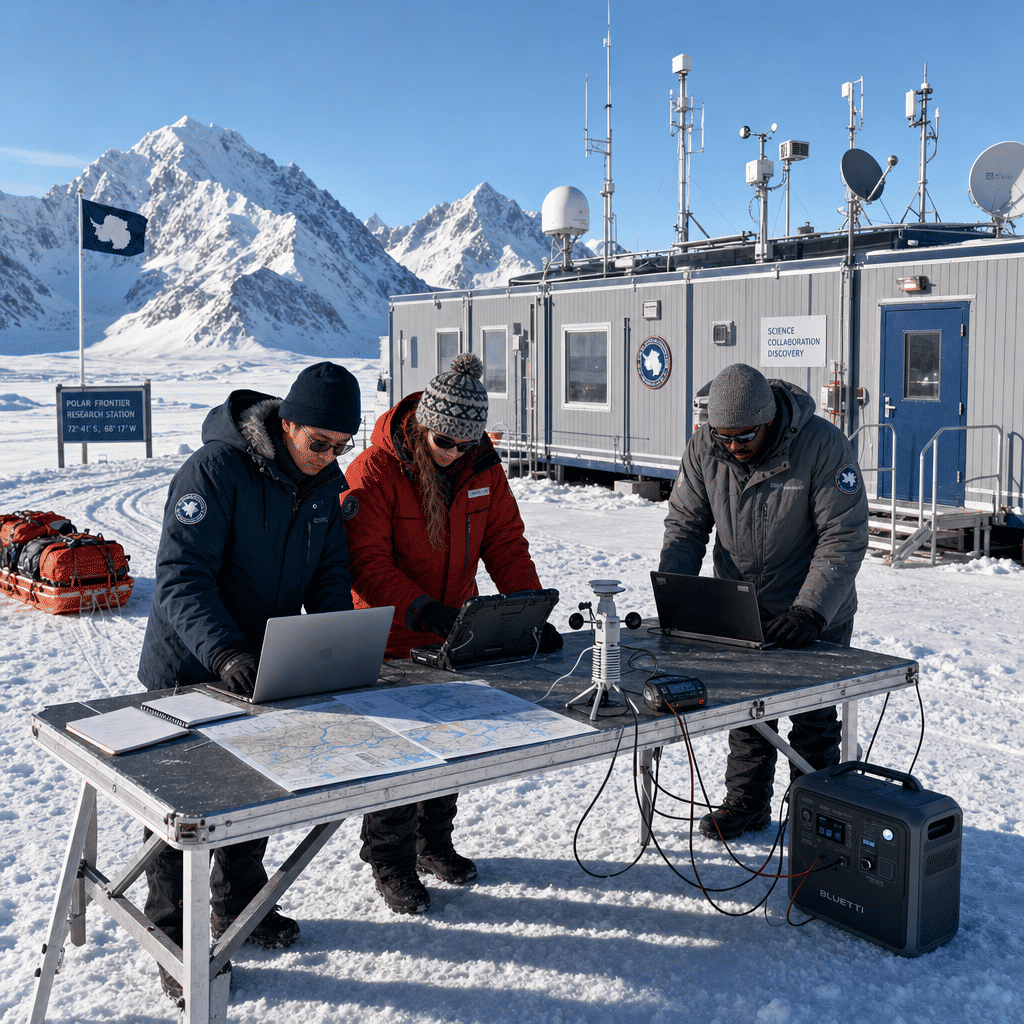
Global collaborations have become a cornerstone for advancing scientific research, especially in fields that pose challenges on an international scale. Among these, glacial research stands out as an area that benefits profoundly from cross-border partnerships. Our global network is a testament to how collaborative efforts can empower missions, bringing together expertise, resources, and shared goals from around the world to address the pressing issues faced by our planet’s glaciers.
Glacial research is inherently multidisciplinary, requiring insights from geology, climatology, hydrology, and environmental science. This complex interplay of disciplines is best addressed through international collaboration, where varied expertise converges to form a comprehensive understanding. Scientists from different countries contribute unique regional insights and data, creating a richer, more nuanced global picture of glacial dynamics and their impacts.
The benefits of fostering collaboration across continents extend beyond pooling scientific expertise. Historically, research was limited by geographical and institutional boundaries, with scientists working in isolated silos. However, in today's interconnected world, digital communication tools and data-sharing platforms have revolutionized the way scientists collaborate. Real-time communication and data exchange allow for seamless integration of research efforts, enabling scientists to work collectively on problems and share breakthroughs almost instantly.
One of the significant outcomes of global collaborations in glacial research is the enhanced ability to monitor and predict changes in glacier mass and dynamics accurately. This is crucial in the context of climate change, as glaciers are sensitive indicators of global warming and have a direct impact on sea level rise. By combining satellite data, on-the-ground measurements, and sophisticated climate models, international teams can detect subtle changes in glaciers with greater accuracy and predict future trends.
Moreover, global collaborations enhance the capacity for large-scale research initiatives that would be otherwise unfeasible for individual countries. Joint expeditions to remote and challenging environments, such as polar ice caps and high-altitude glaciers, are made possible through shared resources and collective expertise. These missions not only advance scientific understanding but also reinforce diplomatic and cultural ties between participating nations.
Such collaborations also offer invaluable opportunities for capacity building and education. Engaging scientists from developing countries allows for technology transfer and skill enhancement, empowering local researchers to contribute to global scientific discourse. This inclusive approach ensures that diverse perspectives inform global strategies and solutions, ultimately enriching the research process.
Finally, global collaborations in glacial research serve as a powerful reminder of the shared responsibility we bear in preserving our planet. By working together, countries can transcend political and cultural differences to achieve common goals for the betterment of all. This spirit of cooperation sets a precedent for addressing other global challenges, demonstrating the potential of international partnerships to drive meaningful scientific and social progress.
In conclusion, the global network that supports our mission in glacial research exemplifies the transformative power of collaboration. By fostering connections across continents and disciplines, we harness the collective strength of the global scientific community to safeguard our planet’s glaciers and, by extension, our environment and future.