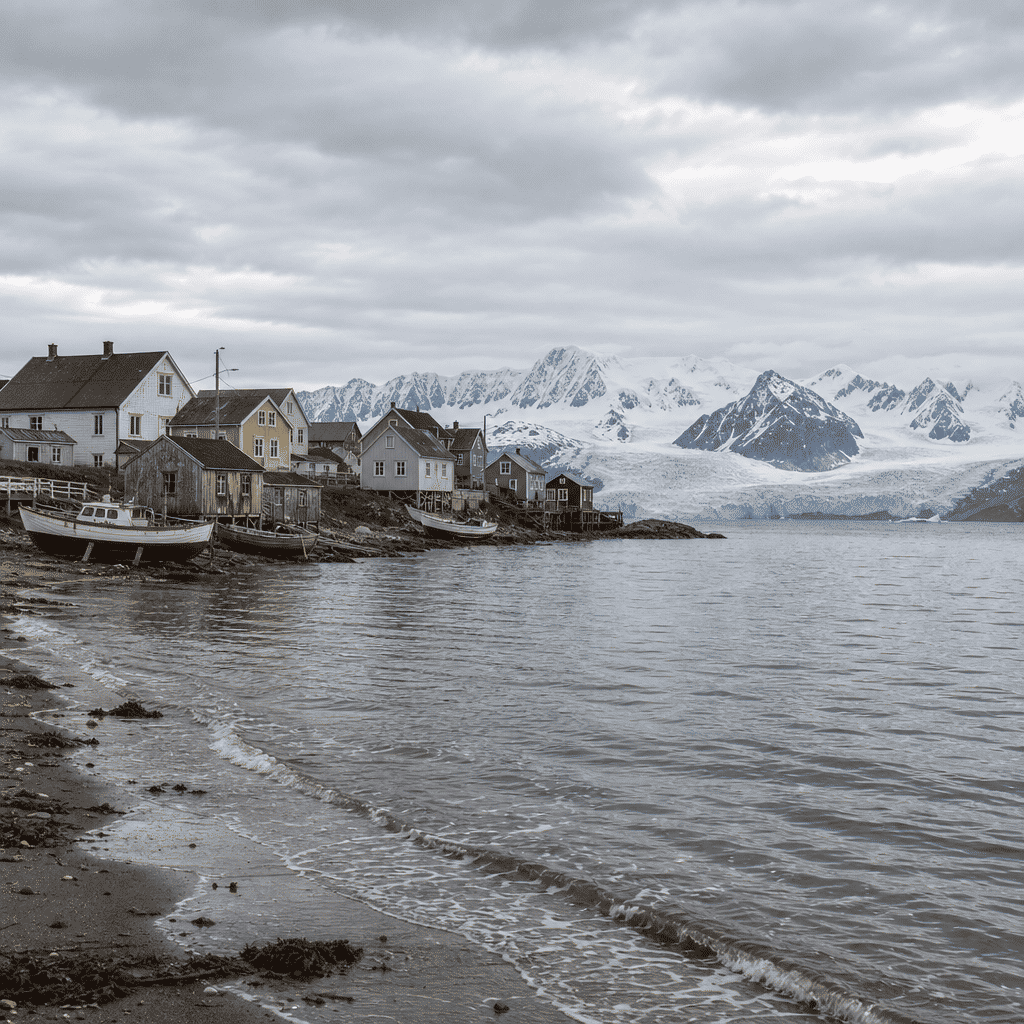
Glaciers, often considered the frozen reservoirs of our planet, play a critical role in maintaining Earth's delicate balance. These massive, moving bodies of ice, formed over tens of thousands of years, store around 69% of the world's freshwater. However, as global temperatures continue to rise, glaciers around the world are melting at unprecedented rates, significantly contributing to sea level rise. Understanding this connection is crucial in addressing the broader implications for coastal communities worldwide.
Glaciers are not confined to polar regions alone; they occupy mountainous regions and even some regions of the tropics, impacting local ecosystems and supporting millions of people who rely on glacial meltwater. When global climates are stable, glaciers maintain a balance between snow accumulation in the winter and ice melt in the summer. However, the recent upsurge in greenhouse gas emissions has tipped this balance, resulting in a net loss of ice mass from glaciers.
As glaciers melt, the water that was once stored as ice flows into rivers and makes its way to the oceans, contributing to sea level rise. According to the Intergovernmental Panel on Climate Change (IPCC), the melting of glaciers and ice sheets contributes to more than one-third of the observed rise in sea levels. This is a major concern because even small increases in sea levels can lead to significant impacts on coastal regions, threatening infrastructure, displacing populations, and disrupting ecosystems.
One stark example is the Greenland Ice Sheet, which alone has the potential to raise global sea levels by about 7.4 meters if fully melted. Currently, Greenland is losing ice at an alarming rate, attributable to both surface melting and the breaking off (or calving) of icebergs. Similarly, the Antarctic Ice Sheet, though more stable than Greenland, holds an even greater threat as it contains enough ice to raise sea levels by approximately 58 meters.
The impact of rising sea levels is multifaceted. Low-lying coastal areas face increased risks of flooding, erosion, and saltwater intrusion, which can contaminate freshwater supplies. These changes have severe repercussions for agriculture, making food supplies increasingly unpredictable. Additionally, the loss of coastal habitats and wetlands affects biodiversity, leading to further ecological disruptions.
For coastal communities, particularly in developing nations, the reality of rising seas is both immediate and daunting. These regions often lack the resources and infrastructure needed to adapt to such changes, making them especially vulnerable to displacement and economic instability. Implementing adaptive measures like the creation of sea walls, restoring mangroves, and improving urban planning to account for elevated waters becomes essential in mitigating these impacts.
Addressing the root cause of glacial melt—climate change—requires a concerted global effort. Reducing greenhouse gas emissions through transitioning to renewable energy, improving energy efficiency, conserving natural ecosystems, and exploring carbon capture technologies are all imperative strategies. International cooperation and agreements, such as the Paris Accord, play a vital role in creating a unified approach to addressing climate-related challenges.
In conclusion, while the link between melting glaciers and rising sea levels is a critical concern, it is also a rallying point for global awareness and action. As this challenge affects nearly every nation, it underscores the necessity for collaborative solutions and a commitment to safeguarding our planet's future. Through science, policy innovation, and sustainable practices, we can address this formidable issue, ensuring resilience and security for generations to come.